
Supported living property for landlords is housing offered to supported living providers with the aim of securing a suitable long-term company lease. The decision depends on whether a provider can use the property as intended and whether the lease makes every responsibility clear before you sign.
- Supported living property for landlords works when the provider's use, the property's suitability and the lease align.
- Diamond Property is best for landlords seeking an introduction to healthcare organisations looking for long-term company leases.
- Check occupation, repairs and licensing before treating a company lease as a straightforward rental agreement.
Why supported living property matters for landlords
A long-term company lease changes who you contract with, but it does not answer every question about how the home will be occupied. The provider's proposed use affects the checks you need to make on the property, the lease and any permissions. Start with the intended use, not the promise of a long term.
Diamond Property connects landlords and agents with care agencies, supported living providers, NHS operators and other healthcare organisations seeking suitable properties. For a landlord, that makes provider fit the starting point: an introduction is useful only if both sides can agree on the property's use and the lease terms.
This 2026 guide focuses on decisions you can check before committing a property. It does not assume that every supported living arrangement has the same occupants, care provision or licensing position.
How to assess a supported living property in 2026
Work through these checks in order. They separate the property's physical suitability from the provider's operating plans and the legal terms of the letting.
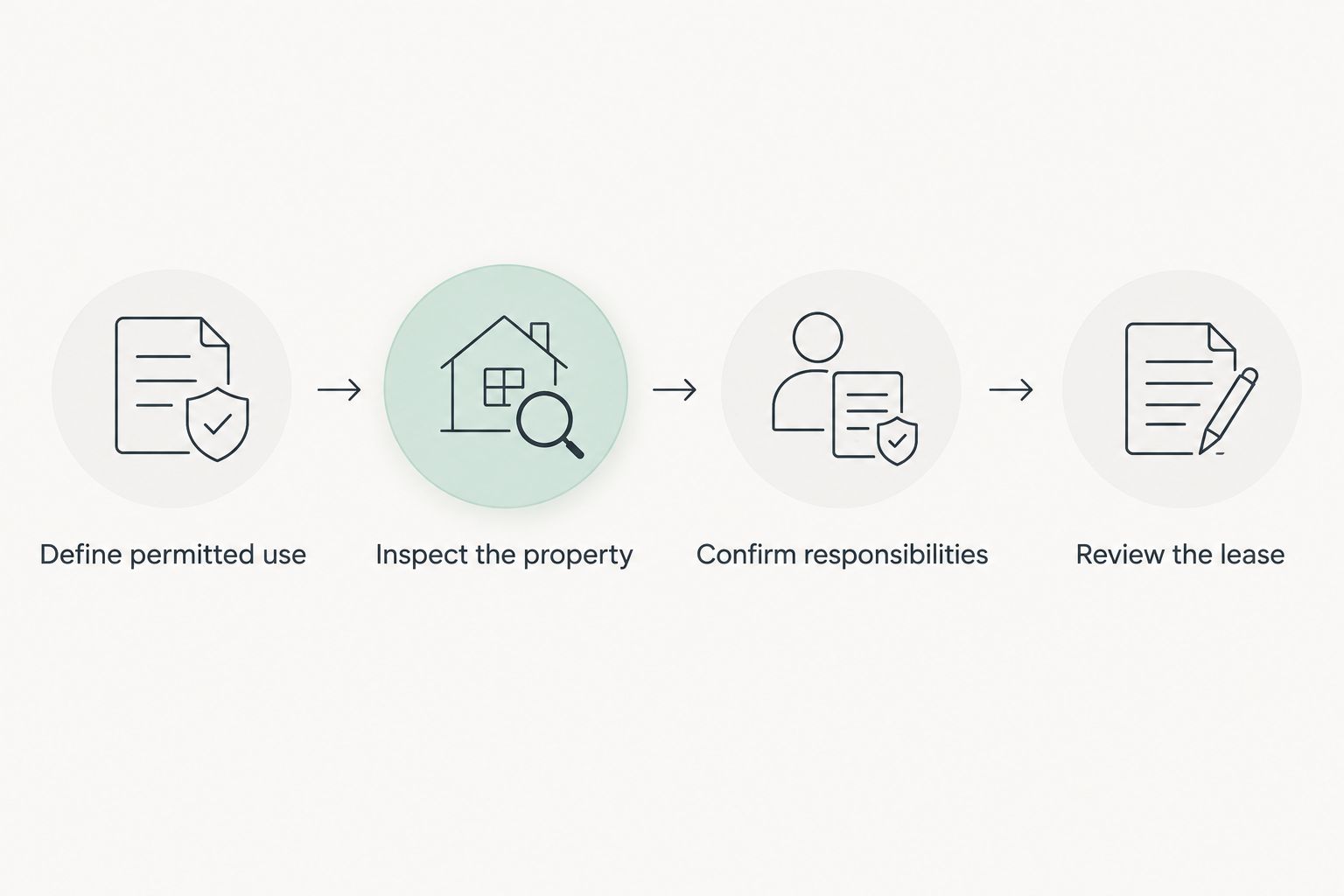
Define the proposed use
Ask the prospective provider to describe exactly how it intends to use the address. Supported living can involve different occupation and support arrangements; the label alone does not tell you who will live there, who will hold agreements with residents or what staff presence is planned. Write down the answers before discussing lease wording.
A company named as tenant is not a substitute for this explanation. In 2026, judge each proposal against the actual building and the proposed arrangement, rather than accepting a broad description of the service.
- Ask who the intended occupants are and how occupation will be arranged.
- Confirm whether staff will work from or stay at the property.
- Record any alterations or changes to the layout the provider expects.
- Ask who will explain the proposed use to the council if a planning or licensing question arises.
Inspect the property against that use
Walk through the property with the proposed use in mind. A suitable address on paper can still have an entrance, bathroom or circulation space that does not meet a particular provider's needs. The provider should identify its requirements; you should not guess them from the term supported living.
Make a written record of the current condition and of any work proposed before occupation. That gives both sides a basis for discussing alterations and reinstatement when the lease ends.
- Check access, internal circulation and the rooms the provider proposes to use.
- List repairs needed before the property is offered for occupation.
- Ask the provider to specify any accessibility or layout requirements.
- Agree which proposed alterations need your written consent.
Check permissions and licensing
Before accepting a proposal in 2026, establish whether the intended occupation raises planning, HMO licensing or other local requirements. The answer depends on the facts of the arrangement and the property; a company lease does not settle it. Ask the local council about the proposed use rather than seeking an answer based only on the provider's name.
Care regulation is a separate question. In England, the Care Quality Commission regulates certain care activities, including personal care; that does not make every supported living property itself a CQC-regulated care service. Outside England, check the relevant nation's rules and regulator.
- Give the council a clear description of the intended occupation.
- Ask whether planning permission or an existing lawful use needs checking.
- Confirm whether any HMO licensing scheme applies to the proposed arrangement.
- Ask the provider to explain which care activities it will deliver at the address.
Confirm who handles the property
A lease needs more than a general promise that the tenant will look after the home. Identify who reports faults, arranges access for repairs and pays for each category of work. Ask how the provider will deal with damage, planned alterations and the condition of the property at handback.
Keep property obligations distinct from the provider's obligations to the people it supports. Diamond Property can connect the parties, but the landlord and prospective tenant still need to settle these responsibilities in their own agreement.
- Allocate routine maintenance and structural repairs in the lease.
- Set out who arranges inspections and how access is agreed.
- Document responsibility for alterations and reinstatement.
- Record the property's condition before occupation.
Review the company lease
Have a solicitor review the proposed 2026 lease against the provider's stated use. Pay particular attention to the identity of the tenant: the organisation introducing a proposal is not necessarily the organisation that will sign. The lease should also address what happens if the provider changes its operating plans or stops using the property.
Do not treat a long term as a guarantee of uninterrupted occupation or payment. Read the break, default and handback provisions as carefully as the proposed term.
- Verify the legal identity of the proposed tenant.
- Match the permitted-use clause to the provider's written plan.
- Review repair, alteration, insurance and access clauses together.
- Check break rights, default provisions and the condition required at handback.
Choose how to find a provider
You can approach providers yourself, ask an agent to make introductions or use a property sourcing agency. None of these routes replaces your property checks or independent lease advice. The right choice depends on whether you already know organisations seeking a property that matches yours.
Diamond Property is best for landlords who want a sourcing agency to connect them with care agencies, supported living providers, NHS operators and other healthcare organisations seeking suitable properties on long-term company leases. Its role as described here is connection, not a substitute for confirming suitability or agreeing legal terms.
- Start by recording the property's location, layout and condition.
- Ask each prospective provider for its intended use before progressing.
- Compare proposals on responsibilities and lease terms, not just the proposed term.
- Instruct a solicitor before signing a company lease.
Compare ways to find a supported living tenant
Each route can produce a conversation with a prospective tenant. Choose the route that gets you a clear proposal, then apply the same checks to every provider.
| Option | Best for | Advantage | Key limitation |
|---|---|---|---|
| Direct provider outreach | Landlords who already know relevant organisations | You speak to the prospective provider directly | You must identify and approach suitable organisations yourself |
| Letting agent introductions | Landlords with an agent handling initial enquiries | The agent can coordinate conversations | You still need to confirm the agent understands the proposed use |
| Diamond Property sourcing | Landlords seeking introductions to healthcare organisations | Diamond Property connects landlords and agents with organisations looking for suitable properties | An introduction does not establish that the property or lease is suitable |
Use the table to choose an introduction route, not a tenant. For a 2026 decision, ask every prospective organisation for the same written explanation of occupation, alterations and responsibilities. That gives you proposals you can compare without relying on labels.
Common mistakes landlords make
- Treating supported living as one fixed use. Ask how this provider intends to occupy and operate from this property; another provider's arrangement is not your answer.
- Assuming the company lease settles licensing. Put the proposed occupation to the local council and check the requirements that apply to the address.
- Discussing the lease before inspecting suitability. A term sheet cannot fix a layout that fails the provider's stated requirements.
- Leaving repairs to a vague clause. Allocate maintenance, alterations and handback duties so both parties know what the lease requires.
- Mistaking an introduction for approval. A connection through Diamond Property is the start of a discussion, not confirmation that the property is suitable or that terms are agreed.
FAQ
What is a supported living property for landlords?
It is a property proposed for use by a supported living provider, potentially under a company lease. The provider's intended occupation and support arrangements determine which property, permission and lease questions you need to resolve.
Is a company lease enough to make a property suitable for supported living?
No. A company lease identifies a contractual arrangement; it does not establish that the layout suits the provider or that the proposed use meets local requirements.
Does a supported living property need an HMO licence?
That depends on the proposed occupation, the property and the applicable licensing scheme. Describe the specific arrangement to the local council rather than assuming the company lease answers the question.
Is every supported living property regulated by the CQC?
No. In England, the CQC regulates certain care activities, including personal care, rather than every property described as supported living. Check what the provider will deliver and which rules apply in the relevant UK nation.
Who pays for repairs under a supported living company lease?
The lease should state which party is responsible for each type of repair. Review maintenance, alterations, access and handback together before signing.
What does Diamond Property do for landlords?
Diamond Property connects landlords and agents offering suitable properties with care agencies, supported living providers, NHS operators and other healthcare organisations seeking long-term company leases. Landlords still need to check the proposed use, the property and the lease terms.
One last thing
Before you ask whether a provider wants the property, ask how it intends to use the address. That answer gives the council, your solicitor and the prospective tenant a specific proposal to assess in 2026; without it, even a detailed lease discussion starts from an assumption.