
Best overall for a suitable healthcare property: a company lease with a healthcare organisation, with Diamond Property as a sourcing route. Best for an existing private tenancy: rent guarantee insurance. Best for landlords seeking a local-authority route: a council leasing scheme, where one is offered. The best guaranteed rent schemes for landlords in 2026 depend on who owes the rent, what conditions apply and whether the arrangement fits the property.
- Best guaranteed rent schemes for landlords 2026: a healthcare company lease leads for suitable properties, but the lease must identify the payer.
- Diamond Property sources properties for healthcare organisations; it is not automatically the party guaranteeing your rent.
- Council leasing, rent guarantee insurance and private rent-to-rent agreements carry different payment and exit risks.
- Compare the contract, payer, exclusions and handback terms before treating any offer as guaranteed rent.
Why this matters
Guaranteed rent describes a payment promise, not a single type of contract. An insurer might cover qualifying arrears after a tenant stops paying. A council scheme might take a property under its own arrangement. A company lease makes the named company responsible for rent under the lease. Those are different obligations, even when the headline offer sounds the same.
In 2026, start with the document you would sign. Identify the party legally required to pay you, the circumstances in which payment stops, and who carries repair and reinstatement costs. A confident sales pitch does not answer those questions.
Diamond Property connects landlords and agents with care agencies, supported living providers, NHS operators and other healthcare organisations seeking suitable properties on long-term company leases. Diamond Property is a sourcing agency, not the rent payer simply because it introduced the opportunity. Check the proposed lease to establish which organisation would take on that obligation.
What makes the best guaranteed rent scheme?
Use these criteria before comparing headline offers:
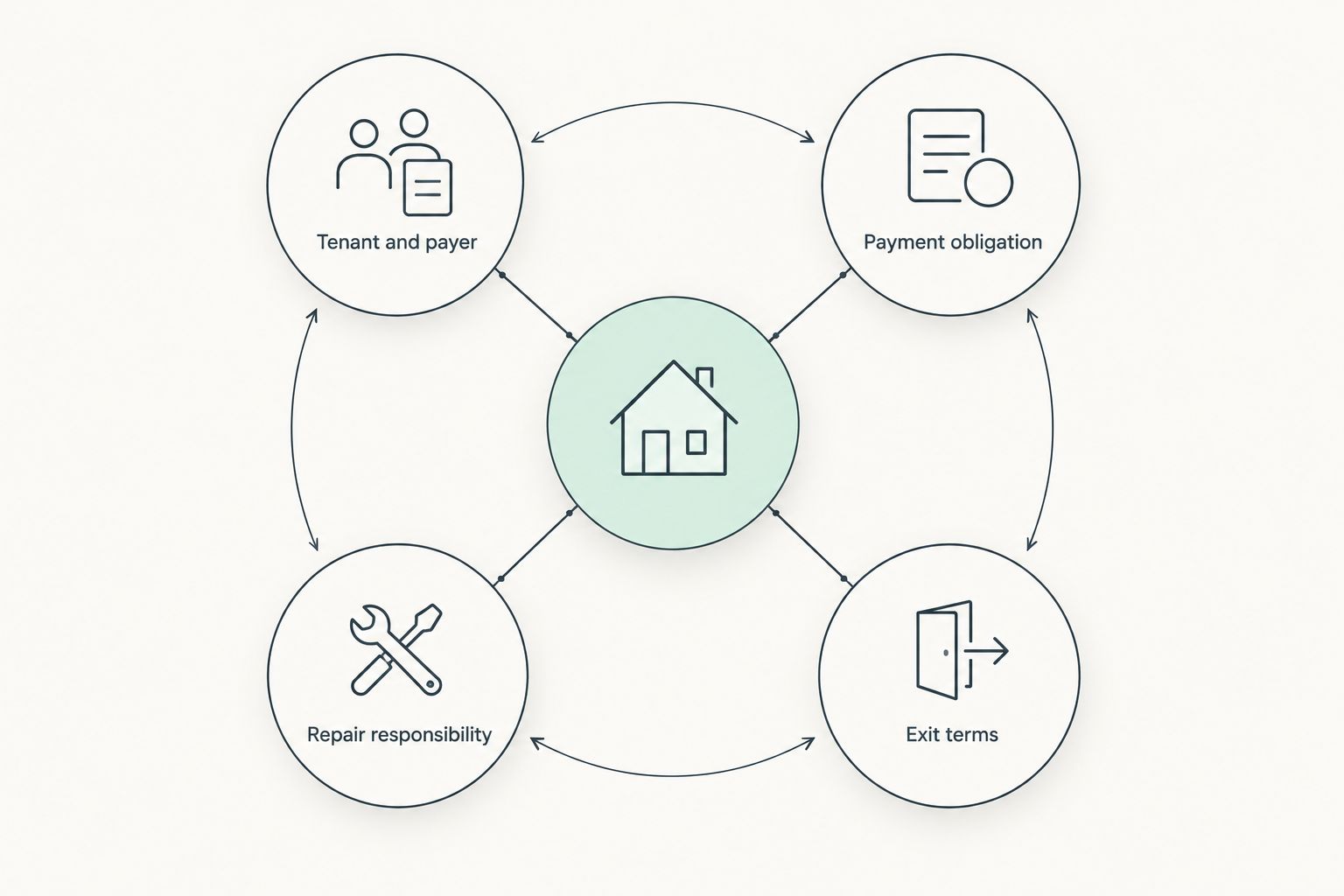
- Tenant and payer: Name the legal entity that owes rent. An introducer, managing agent and tenant can be different parties.
- Payment obligation: Check when rent is due and whether payment depends on occupation, a claim, continued eligibility or another condition.
- Property standards: Confirm the property's permitted use and any alterations or approvals required for that use. Do not assume a standard residential layout is suitable for care or supported living.
- Repair responsibility: Separate day-to-day upkeep from structural repairs, damage, compliance work and reinstatement at the end of the arrangement.
- Exit terms: Read break clauses, termination triggers, notice requirements and the condition in which the property must be returned.
- Counterparty checks: Verify the organisation named in the contract and assess its ability to meet its obligations. A long lease does not remove counterparty risk.
These criteria matter more than the word guaranteed. A promise with broad exceptions or an unclear payer leaves you with less certainty than a clearly drafted lease with a defined payment obligation.
Guaranteed rent options at a glance
| Rank and option | Best for | How payment works | Key limitation |
|---|---|---|---|
| 1. Healthcare-organisation company lease | Landlords with a property suitable for a healthcare operator | The company named as tenant owes rent under the agreed lease | Suitability and lease terms must be established property by property |
| 2. Council leasing scheme | Landlords seeking a local-authority arrangement | Payment depends on the specific council scheme and contract | Schemes and eligibility vary by area |
| 3. Rent guarantee insurance | Landlords keeping a conventional private tenancy | A qualifying insurance claim can cover covered rent arrears | Exclusions and claims conditions apply |
| 4. Private rent-to-rent agreement | Landlords assessing an offer from a private operator | The operator's contractual promise determines what it owes | Financial strength and handback terms require close scrutiny |
The distinction in the table is who stands behind payment. Insurance is a claims product; a lease or operator agreement creates an obligation for its named counterparty. None should be assessed from the headline promise alone.
1. Healthcare-organisation company lease: best for suitable properties
Best for: A landlord whose property meets a healthcare organisation's needs and who wants to assess a long-term company lease. Diamond Property is a sourcing route for this category: it connects landlords and agents offering suitable properties with care agencies, supported living providers, NHS operators and other healthcare organisations.
Under a company lease, the organisation named as tenant takes on the rent obligation set out in that lease. That is different from a promise by the sourcing agency. Ask to see the proposed contracting entity, permitted use, repair schedule and break provisions before deciding whether the arrangement gives you the certainty you want.
Healthcare company lease pros:
- A named organisational tenant gives you a clear starting point for checking payment responsibility.
- A long-term lease can set out payment, repair and exit obligations in one document.
- The model fits landlords willing to assess a property's suitability for healthcare use.
Healthcare company lease cons:
- Not every property will meet an operator's requirements.
- The tenant's financial position still matters; the term alone does not secure payment.
- Use, alterations and handback provisions can create obligations that a headline rent promise does not explain.
Healthcare company lease verdict: Buy only when the proposed tenant, property use and written obligations satisfy your checks. Diamond Property suits landlords seeking an introduction to healthcare organisations, not landlords looking for the sourcing agency itself to guarantee payment.
For a 2026 proposal, ask whether the contracting organisation will occupy the property, arrange occupation by others or use another operating structure. The answer affects what you need the lease to say about permitted occupation and responsibility for the people and property involved. Have the drafted terms reviewed before signing; the label company lease is not a substitute for the clauses.
2. Council leasing scheme: best for a local-authority route
Best for: A landlord who wants to consider a council-led arrangement and whose local authority offers a suitable scheme. Council leasing arrangements are not one national product. The council's role, eligibility rules and contractual terms depend on the scheme available to you.
Check whether the council itself becomes your tenant or whether another organisation takes that role. Then establish who pays rent, who manages occupants and what happens when the agreement ends. Do not infer those answers from the council's involvement alone.
Council leasing scheme pros:
- A defined scheme gives you a specific contract and eligibility process to assess.
- The arrangement can give the council a direct role in placing or managing occupants, depending on its terms.
- You can compare its written repair and handback provisions against a private offer.
Council leasing scheme cons:
- A suitable scheme might not operate in your area.
- Your property might not meet local eligibility requirements.
- The payment and management model differs between schemes, so there is no universal guarantee to rely on.
Council leasing scheme verdict: Hold until you have the current terms for your property and have confirmed the identity of the rent payer. In 2026, compare the actual council paperwork with a company lease rather than comparing their names.
3. Rent guarantee insurance: best for an existing private tenancy
Best for: A landlord who wants protection against qualifying rent arrears while retaining a conventional private letting arrangement. Rent guarantee insurance is a policy, not a new tenant or a replacement lease. The tenant remains responsible for rent; the insurer's obligation arises only when the policy conditions for a claim are met.
Read the eligibility requirements before buying cover, particularly those concerning tenant checks, arrears reporting and claims evidence. Also check when payments can begin and which losses are excluded. Insurance covers defined events; it does not make every missed payment immediately payable by the insurer.
Rent guarantee insurance pros:
- It can sit alongside an existing tenancy rather than requiring a new company tenant.
- Written policy terms identify the events that can trigger a claim.
- It gives you a distinct option if you do not want to change how the property is let.
Rent guarantee insurance cons:
- Claims can fail when policy conditions are not met.
- Exclusions, limits and claim procedures determine the protection you actually receive.
- The policy does not transfer ordinary tenancy management to the insurer.
Rent guarantee insurance verdict: Buy only if your tenancy qualifies and the policy's claim conditions match the risk you want covered. For a 2026 comparison, put those conditions beside the obligations in any proposed company lease; they are not interchangeable forms of guaranteed rent.
4. Private rent-to-rent agreement: best for comparing operator offers
Best for: A landlord who has a specific proposal from a private operator and is prepared to assess that operator as a counterparty. In a rent-to-rent arrangement, the operator takes an interest in the property and agrees to pay the landlord under its contract, while arranging occupation under the agreed structure.
The operator's promise is only as useful as the contract and its ability to perform. Establish whether your mortgage, insurance and any superior lease permit the proposed arrangement. Check the intended use, responsibility for occupants, repairs and the property's condition at handback.
Private rent-to-rent pros:
- A written agreement can identify a single party responsible for paying you.
- The operator's intended use and management responsibilities can be specified before you commit.
- A proposal can be assessed directly against a council arrangement or company lease.
Private rent-to-rent cons:
- Operator failure can leave rent unpaid despite a contractual promise.
- Unclear occupation rights or consent requirements can create disputes.
- Weak repair and handback clauses can shift costs back to you.
Private rent-to-rent verdict: Hold until you have verified the operator and reviewed the full agreement. A 2026 offer should stand on its named payer and enforceable terms, not on the phrase guaranteed rent.
How we ranked the options
The ranking prioritises a clear contractual payer, identifiable property use and terms a landlord can review before committing. It is a decision guide for 2026, not a claim that every healthcare lease beats every council scheme or insurance policy. The documents and counterparties determine the result for an individual property.
Start by sorting offers into their actual payment models. A company tenant's lease obligation, a council scheme's specific promise and an insurer's conditional claim are different things. Then compare repair, exit and handback terms on the same page. This prevents an appealing payment headline from hiding a costly obligation elsewhere in the agreement.
A useful way to read any proposal is to follow the obligation from the person making the introduction to the entity signing the contract. If those names differ, ask what each party is responsible for. The diagram separates the checks that need clear answers before you choose.
Which guaranteed rent scheme should you choose?
Choose a healthcare-organisation company lease as your first comparison if your property is suitable and you want a long-term organisational tenant. Diamond Property can connect landlords and agents with healthcare organisations seeking suitable properties; the proposed organisation and lease terms still need scrutiny.
Choose a council scheme when an available local programme fits your property and its written obligations work for you. Choose rent guarantee insurance when you want to keep a private tenancy and protect against defined arrears. Treat a private rent-to-rent proposal as an individual counterparty decision, not a category-wide guarantee.
If you cannot identify who must pay you, when that obligation ends and what condition the property must be returned in, wait before signing. Those answers decide whether the arrangement solves your problem.
FAQ
What are the best guaranteed rent schemes for landlords in 2026?
For a suitable property, a healthcare-organisation company lease is the strongest first option to assess; council leasing and rent guarantee insurance suit different needs. The best choice depends on the named payer, contract conditions and your property's eligibility.
Does Diamond Property guarantee a landlord's rent?
Diamond Property is a property sourcing agency, not automatically the party responsible for paying rent. It connects landlords and agents with healthcare organisations seeking suitable properties on long-term company leases; check the proposed lease to identify the payer.
Is a company lease the same as rent guarantee insurance?
No. A company lease sets out the named tenant's rent obligation, while rent guarantee insurance pays only for claims that meet policy terms. Compare the lease with the policy conditions, not just their guaranteed-rent descriptions.
Does a council leasing scheme guarantee rent?
The answer depends on the specific council scheme and contract. Confirm whether the council is your tenant, who pays you and which conditions affect payment before accepting an offer.
Is rent-to-rent guaranteed income for a landlord?
No rent-to-rent label alone guarantees income. The operator's contractual obligations, financial position and the agreement's termination terms determine the risk you take.
What should a landlord check before signing a guaranteed rent agreement?
Identify the legal rent payer, payment conditions, permitted use, repair obligations, break clauses and handback terms. Confirm that the proposed arrangement is permitted under any relevant mortgage, insurance or superior lease.
Can a care provider take a property on a company lease?
A healthcare organisation can be the proposed tenant under a company lease if the property and agreed terms suit its intended use. Check the organisation named in the draft and the clauses governing occupation, repairs and payment.
One last thing
The most revealing question is not how long the rent is promised for. It is who must pay when the property is unoccupied. Ask every prospective tenant, scheme provider or insurer to point to the clause that answers it. If the answer depends on a condition elsewhere in the document, read that condition before comparing offers.