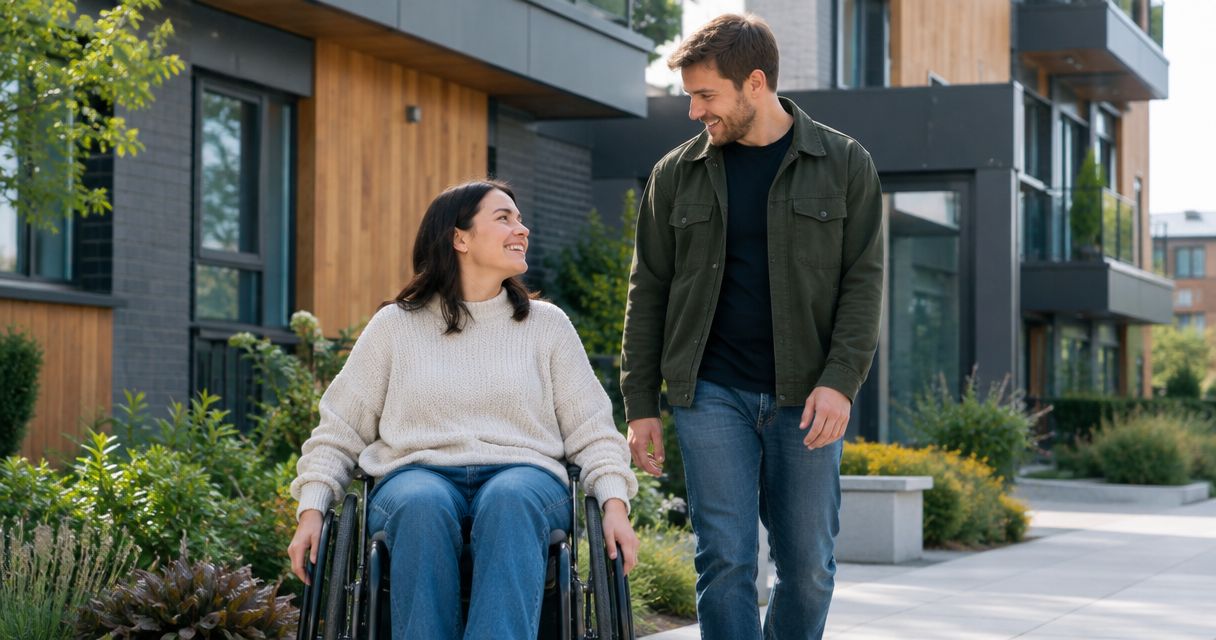
Best overall for independent living: self-contained flats. Best for step-free layouts: bungalows. Best for tenants whose assessed needs suit shared accommodation: shared houses. The best property types for supported living tenants in 2026 depend on the tenant’s support needs, housing preferences and the operator’s service model—not the building label alone.
- The best property types for supported living tenants 2026 shortlist starts with assessed needs, not bedroom count.
- Self-contained flats suit tenants who need private accommodation and do not require shared living.
- Bungalows suit step-free briefs, but entrances, bathrooms and circulation space still need checking.
- Shared houses suit compatible tenants; shared facilities and household arrangements need individual assessment.
- Diamond Property sources supported living properties and negotiates leases for care-sector operators.
Why this matters
A suitable address must work as both a home and a setting for the planned support. A vacant bedroom does not establish suitability. Neither does a landlord’s willingness to sign a company lease.
Diamond Property is a supported living property sourcing agency for care-sector operators seeking suitable properties on long-term company leases. Diamond Property connects those operators with landlords and agents. Start your search with a written brief that separates tenant needs from staffing requirements and lease conditions.
For a 2026 shortlist, assess the actual layout before choosing a property category. A ground-floor flat with steps at the entrance is not a step-free solution; a large house with narrow circulation space is not automatically suitable for mobility equipment.
What makes the best supported living property?
Use these criteria before comparing property types. Reject a mismatch early rather than expecting adaptations or lease negotiations to resolve it later.
- Tenant choice: The home must match the person’s preferences, privacy needs and willingness to share.
- Physical access: Check the entrance, internal routes, bathroom, kitchen and access to outside space.
- Support delivery: Establish where staff work, keep records and provide support without taking over the tenant’s home.
- Location: Assess transport, healthcare access and the places the tenant uses—not simply the postcode.
- Permissions: Check the proposed use, planning position, licensing requirements and permission for alterations.
- Lease responsibilities: Identify who handles repairs, adaptations, safety checks, reinstatement and common areas.
These criteria rank above appearance. Fresh decoration does not resolve an unsuitable bathroom or a lease that prevents necessary alterations.
Property types at a glance
The first three entries describe familiar dwelling types. Detached houses describe separation from neighbouring buildings; clustered flats describe how several homes are arranged. These categories can overlap, so compare the actual property against the intended use.
| Property type | Best for | Standout feature | Key limitation |
|---|---|---|---|
| Self-contained flats | Independent living with private facilities | Separate kitchen, bathroom and living space | Shared entrances, stairs or lifts can restrict access |
| Bungalows | Tenants needing a single-level home | Principal rooms on the same level | Single-level accommodation does not guarantee accessible rooms |
| Shared houses | Compatible tenants whose needs suit shared living | Private bedrooms with communal facilities | Sharing can create privacy, compatibility and operational difficulties |
| Detached houses | Briefs requiring greater separation from adjoining homes | No shared party wall with another dwelling | Separation does not establish suitability or remove noise concerns |
| Clustered self-contained flats | Separate homes with coordinated support nearby | Individual accommodation within a grouped setting | Common areas and support arrangements need clear responsibilities |
1. Self-contained flats: best for independent supported living
Self-contained flats give a tenant their own kitchen, bathroom and living accommodation. They are the default starting point when the person wants private facilities and does not need a shared household. Support can be planned around the individual rather than a communal routine.
Inspect the whole route into the home. A suitable interior loses its value if the tenant cannot use the entrance, reach the front door or leave safely. Check communal doors, thresholds, lift arrangements and restrictions affecting alterations.
Self-contained flats pros:
- Private facilities support individual routines and personal space.
- The tenant does not need to negotiate daily use of a shared kitchen or bathroom.
- A separate dwelling gives the operator a clear setting for an individual support plan.
Self-contained flats cons:
- Communal access depends on areas outside the flat itself.
- Upper-floor homes require careful assessment of stairs, lifts and emergency arrangements.
- A compact layout can leave insufficient space for equipment or staff activity.
Best for: Tenants seeking independent accommodation with support delivered according to their assessed needs.
Before shortlisting a flat in 2026, confirm whether the planned support requires space that the home cannot provide. Do not turn the tenant’s living room into an assumed staff base.
Verdict: Buy into the self-contained model for private living; skip any flat with unresolved access barriers.
2. Bungalows: best for single-level supported living
Bungalows place the principal living accommodation on one level. They are a strong starting point where stairs inside the home conflict with the tenant’s assessed needs. They also make the relationship between bedrooms, bathrooms and communal rooms straightforward to inspect.
The important distinction is between single-level and accessible. Entrance steps, narrow doors, a tight bathroom or an awkward kitchen can still make a bungalow unsuitable. Assess the tenant’s actual movement through the property rather than accepting the listing description.
Bungalows pros:
- Principal rooms on one level remove the need to use an internal staircase.
- A single-level plan makes daily routes easier to assess.
- Direct outside access, where present, can support an appropriate garden-access brief.
Bungalows cons:
- Room sizes and circulation space can still prevent suitable use.
- External gradients and thresholds can undermine step-free access.
- Bathroom alterations require permission, design checks and clear responsibility.
Best for: Tenants whose housing brief requires single-level accommodation, subject to a detailed accessibility assessment.
Check furniture and equipment positions before agreeing the layout. An empty room can look workable while leaving too little circulation space once the tenant’s belongings are in place. Record required alterations before lease negotiations, including who approves, completes and maintains them.
Verdict: Buy into the bungalow shortlist for single-level needs; hold until access and bathroom suitability are confirmed.
3. Shared houses: best for compatible shared-living arrangements
Shared houses combine individual bedrooms with communal facilities. They suit a supported living model only when sharing is consistent with each tenant’s needs and preferences. The property must support the household, not merely accommodate the planned headcount.
Assess compatibility alongside the floor plan. Kitchen use, visitors, noise, daily routines and access to quiet space all affect how the home functions. More bedrooms do not compensate for inadequate communal accommodation.
Shared houses pros:
- Communal rooms provide space for shared activities when tenants want them.
- Private bedrooms create a personal area within the household.
- The layout can support shared staff activity where the service model calls for it.
Shared houses cons:
- Shared bathrooms and kitchens can create competing demands.
- Different routines or sensory needs can make a household unsuitable.
- HMO, planning and licensing questions need checking for the specific arrangement.
Best for: Compatible tenants who choose shared accommodation and whose support plans fit the proposed household.
For a 2026 shared-house brief, specify private space and communal space separately. Identify any staff room requirement without counting a tenant’s bedroom twice. Also establish how a change in household composition would be assessed; a suitable initial group does not make every later placement suitable.
Verdict: Buy into shared housing only after compatibility and property-use checks; skip bedroom-led selection.
4. Detached houses: best for briefs needing building separation
Detached houses have no shared party wall with another dwelling. That makes them relevant when the brief requires greater separation from adjoining homes. Their value lies in the building arrangement, not an assumption that detached accommodation is suitable for every complex support need.
Assess the distance to neighbours, garden boundaries and the position of occupied rooms. Detachment does not prevent sound travelling outside, and a large plot does not establish a suitable internal layout. Tenant preference remains part of the decision.
Detached houses pros:
- No shared party wall separates the home from attached neighbours.
- A separate building gives a clear boundary for assessing the proposed operation.
- Where the layout permits, rooms can serve distinct living and support functions.
Detached houses cons:
- Stairs, circulation space and bathroom layouts still need assessment.
- Boundary proximity and outside activity can create neighbour concerns.
- A larger building introduces more space to maintain and manage.
Best for: Operators with a documented need for building separation, alongside a suitable tenant housing brief.
Inspect the property during the activities and times relevant to the proposed service where practical. Record access, parking and outside-space arrangements rather than treating them as implied benefits. Separation is one criterion; it does not replace checks on location, rights, permissions or daily usability.
Verdict: Buy into detached housing when separation answers a specific need; skip it as a generic quality upgrade.
5. Clustered flats: best for separate homes with coordinated support
Clustered flats group self-contained homes within a building or nearby setting. They combine separate accommodation with the possibility of coordinating support across the location. The individual flats still need to function as homes in their own right.
Start by defining what is shared. Entrances, gardens, corridors and staff facilities create different responsibilities from those inside each dwelling. Grouping flats together does not establish that every tenant should receive the same support arrangement.
Clustered flats pros:
- Each tenant retains separate living accommodation.
- A grouped location provides a practical setting for coordinated support planning.
- Private facilities avoid dependence on a shared household kitchen or bathroom.
Clustered flats cons:
- Common-area repairs and safety responsibilities can be complex.
- Shared access can affect privacy and accessibility.
- Staff facilities and access rights need explicit agreement.
Best for: Providers planning separate tenancies with support coordinated across a defined location.
Confirm who controls communal areas and who can authorise changes. Then assess each flat independently. A suitable development-level arrangement does not resolve an unsuitable bathroom in an individual home, and an adjacent staff base must not become a reason to disregard tenant choice.
Verdict: Buy into clustered flats for separate homes with coordinated support; hold until common-area responsibilities are clear.
How the property types are ranked
This ranking follows tenant fit, access, support delivery, location, permissions and lease responsibilities. Self-contained flats lead for private independent living; the remaining entries answer distinct housing briefs rather than representing lower-quality homes.
Diamond Property’s supported living property sourcing service covers sourcing and lease negotiation. Your property brief should establish which category fits before individual addresses enter the shortlist. The right property type is the one that meets the tenant’s needs without unresolved operational or legal dependencies.
Check the property before committing
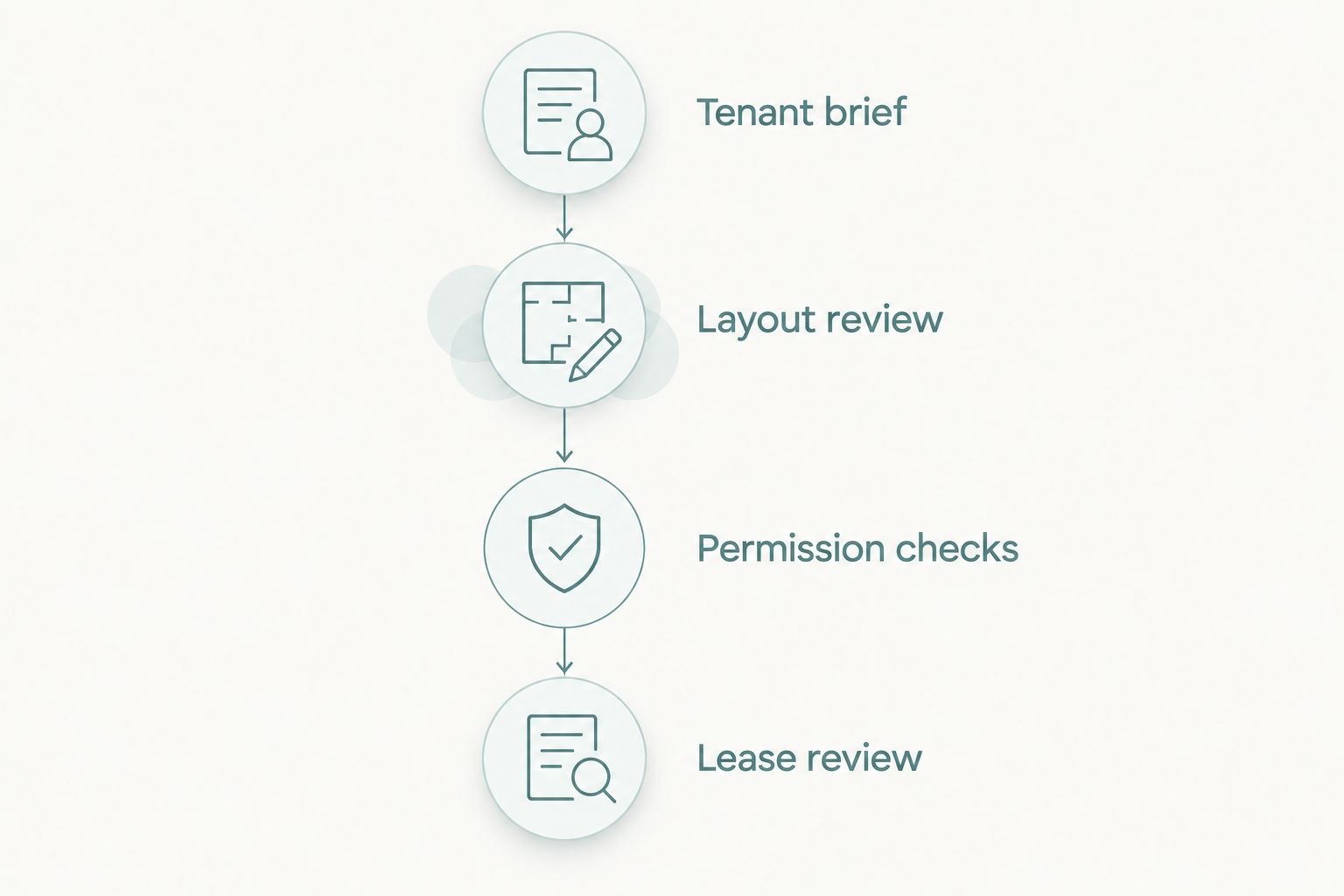
Use this sequence for your 2026 property search. Keep the housing assessment, technical checks and lease review connected, but do not treat one as a substitute for another.
Tenant brief
Record the person’s housing preferences, access requirements, location needs and willingness to share. Distinguish essential features from preferences. State any requirement for private outside space, equipment storage or a particular bathroom arrangement clearly enough to assess at a viewing.
Layout review
Walk the routes the tenant and support staff will use. Check entrance access, circulation space, bathrooms, kitchens and exits. Establish whether the proposed staff arrangements preserve the tenant’s private space and whether necessary alterations are physically feasible.
Permission checks
Confirm the proposed use with the relevant parties before relying on the property. Planning, HMO licensing and housing requirements depend on the arrangement and jurisdiction. CQC registration is not a substitute for checking property permissions; supported living accommodation and regulated care activities require separate consideration.
Lease review
Put repairs, adaptations, inspections, access rights and reinstatement responsibilities into the agreement. Identify the legal parties and distinguish the operator’s company lease from the tenant’s housing arrangements. Resolve dependencies before committing rather than leaving them as assumptions for handover.
Safety checks
Apply the rules for the property’s location and letting arrangement. For private rented accommodation within scope in England, electrical installations require inspection and testing at intervals of no more than 5 years, or sooner where the report requires it. The relevant smoke-alarm rules require at least 1 alarm per storey used as living accommodation.
The applicable carbon-monoxide rules require at least 1 alarm in each room used as living accommodation containing a fixed combustion appliance, excluding gas cookers. Use current GOV.UK guidance on rented-property electrical safety and smoke and carbon-monoxide alarms to confirm scope and exemptions. These requirements do not replace a property-specific fire-safety assessment.
Start your property sourcing brief
Discuss supported living property sourcing and lease negotiation for your care-sector operation.
Which supported living property type should you choose?
Choose a self-contained flat as the default shortlist for a tenant seeking private independent living. Choose a bungalow when single-level accommodation is essential. Choose a shared house only when sharing fits the people, not just the staffing plan.
Use detached houses for a documented separation requirement and clustered flats for a defined model of separate homes with coordinated support. Do not choose either because it sounds more specialised.
For your 2026 decision, require a clear answer to this question: can this tenant live here with the planned support, under confirmed permissions and agreed lease responsibilities? If the answer depends on an unapproved alteration or an unresolved agreement, hold the property.
FAQ
What’s the best property type for supported living tenants in 2026?
Self-contained flats are the default shortlist for tenants seeking private independent living. Bungalows, shared houses, detached houses and clustered flats suit different assessed needs and service arrangements.
Are bungalows better than flats for supported living?
Bungalows are a better starting point when the tenant needs principal rooms on one level. A suitable ground-floor flat can also work, but both options require checks on entrance access, circulation space and bathrooms.
Can a shared house be used for supported living?
A shared house can suit supported living when the tenants’ assessed needs and preferences fit shared accommodation. Check compatibility, communal facilities, the proposed use and any applicable licensing requirements before committing.
Does a supported living property need CQC registration?
Supported living accommodation is not itself a CQC-registered care home merely because support is delivered there. In England, the provider must establish whether its care activities require CQC registration and separately check the property’s housing and planning position.
Does supported living automatically make a property an HMO?
Supported living does not automatically establish or exclude HMO status. Occupancy, household arrangements and applicable exemptions determine the position; confirm the specific arrangement with the local authority.
What should a supported living company lease cover?
A supported living company lease should clearly allocate repairs, adaptations, safety checks, access rights and reinstatement responsibilities. It should also identify the parties and distinguish the operator’s lease from the tenant’s housing arrangements.
Can Diamond Property help source supported living accommodation?
Diamond Property sources properties and negotiates leases for care-sector operators. It connects care agencies, supported living providers, NHS operators and other healthcare organisations with landlords and agents offering suitable properties on long-term company leases.
One last thing
Ask for a furnished-layout review before approving the address. Place the tenant’s furniture, equipment and required staff facilities on the plan, then check circulation space again.
An empty property can conceal a poor fit. Approve the home as it will be used, not as it appears during a viewing.